
You hired a new rep you were excited about. Three months in, they’re still shadowing calls, still unsure when a buyer pushes back, and you’re covering part of their number.
New AEs now take an average of 6.2 months to ramp, the longest The Bridge Group has ever recorded, and its 2026 AE report found only 48% of reps are hitting quota. Every one of those months is a full salary for partial output.
A slow ramp is rarely a hiring mistake. Most of the time, new reps hear a lot, practise very little and wait too long for useful feedback.
In this guide, you’ll find the latest ramp time benchmarks, a simple way to measure ramp on your own team, what really slows new reps down and five practical ways to shorten it.
How long does it take a new sales rep to ramp up?
Longer than most sales leaders expect! A new AE takes about 6.2 months on average to reach full productivity, according to The Bridge Group’s 2026 AE report. An SDR takes about 3 months, according to its 2025 SDR report.
So if your new hire still feels a step behind at month three, they’re not failing. That’s just where most reps are at that point.
What’s worrying is the direction it’s heading. The Bridge Group calls 6.2 months the longest ramp in its study’s history, even though companies now ask for 3.7 years of experience when hiring AEs, up from 2.7 in 2022. Deals have more people involved and take longer to close, so even experienced hires need more time before they can hold their own.
Numbers from the research firm Gartner paint the same picture. In its Sales Enablement Benchmark Report, a new rep usually closes their first deal around week 15. They reach full productivity around week 25. Hitting full quota takes until about week 42.
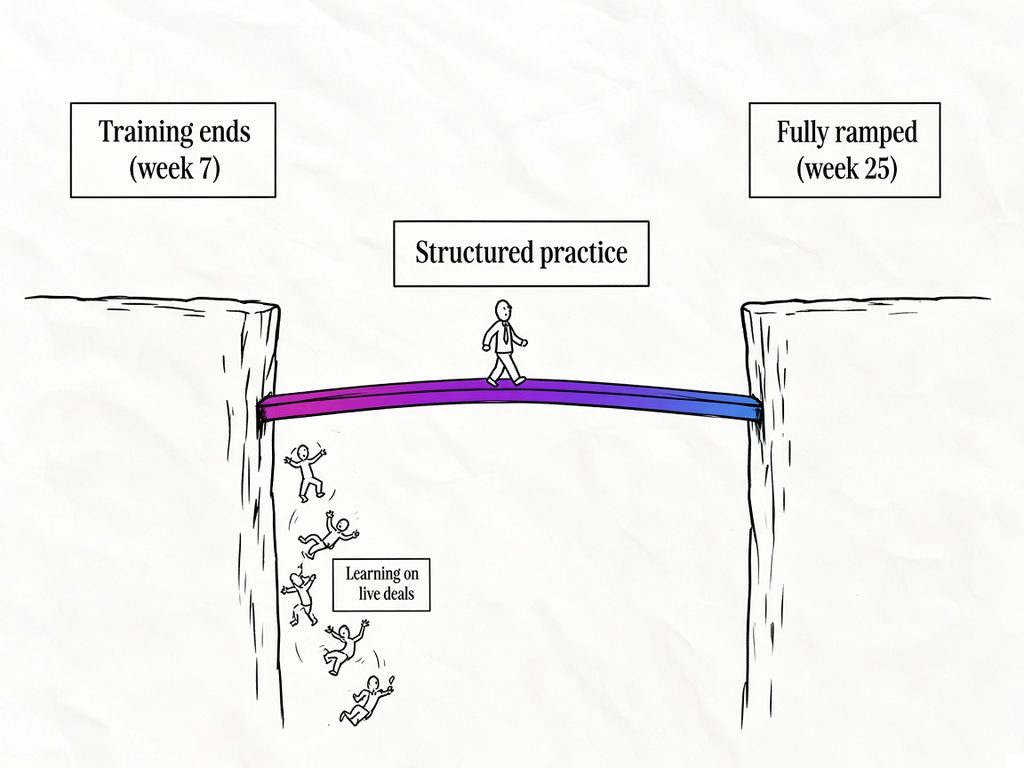
Formal onboarding, though, usually ends around week 7. That leaves a gap of about four months between the end of training and full productivity, where new reps are mostly learning on live deals with your pipeline on the line.
Those months add up quickly. The Bridge Group puts median AE quota at $960,000 a year. Sales Focus worked out that each month you cut from ramp is worth about $40,000 in extra output for every rep.
Why do new reps still take so long to ramp even with a solid onboarding program?
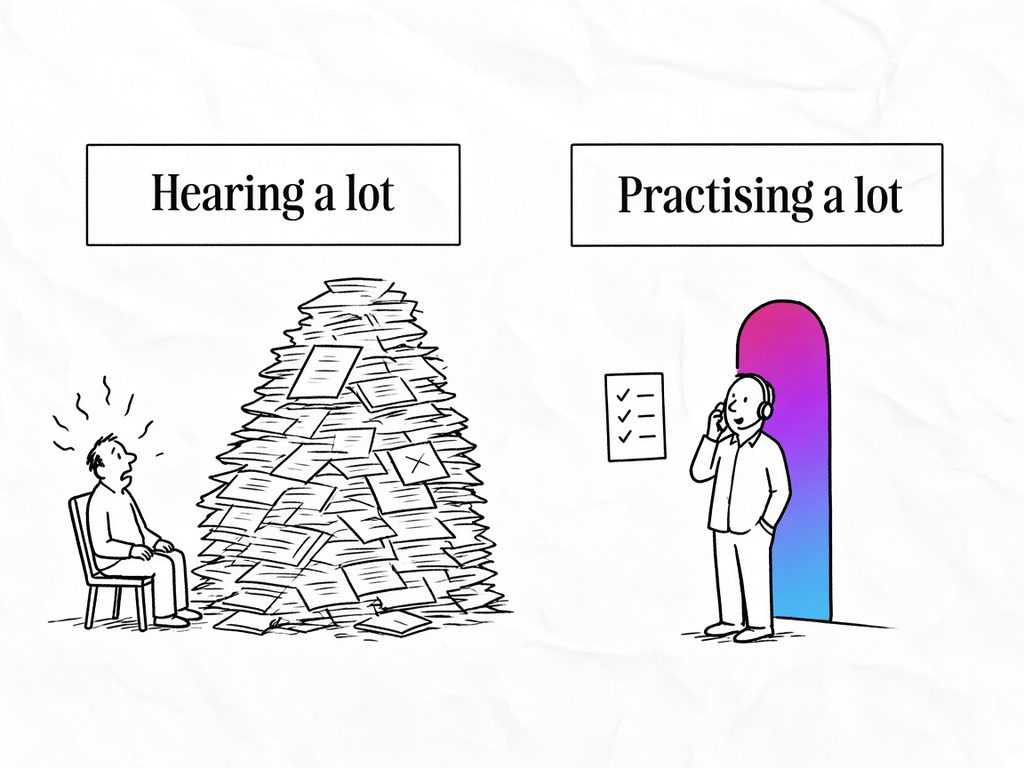
If your onboarding is well planned and your reps still need half a year, the program usually isn’t the problem. What happens after it is.
Training ends long before reps are ready. Formal onboarding wraps up around week 7, but reps don’t reach full productivity until around week 25, so most of the learning happens on live deals. Reps finish training knowing the product but they haven’t yet had enough practice handling real buyers on their own.
Reps listen far more than they practise. In Salesforce’s research, 52% of sellers said traditional enablement doesn’t give them the skills they need, and 41% said they don’t get enough chances to role-play before customer calls. Reps can sit through hours of product walkthroughs and still freeze the first time a buyer says “we’re happy with our current vendor”.
Feedback comes too late. Most new reps only find out what they did wrong after a real call has already gone badly, and by then the deal may be gone. Without a safe place to practise and get corrected early, they keep repeating the same mistakes on live buyers, and each one costs you time and pipeline.
The deals themselves are harder. The Bridge Group links longer ramp to more complex deals and bigger buying committees, so a new rep has more people to win over than ever.
That’s why the fix starts with measuring ramp honestly.
How do you measure ramp time without fooling yourself?
Most sales leaders already track ramp. The problem is that the number often looks better than it really is, and you only notice once a cohort misses its targets. These five traps are behind most flattering ramp numbers.
- Starting the clock at the end of training. Ramp starts on day one. If you count from the end of onboarding, you quietly take seven weeks or more off every rep.
- Using the average. One star hire can pull the average down and hide three reps who are struggling. The median for each hiring cohort gives you a truer picture.
- Leaving out reps who quit. If someone leaves at month four and you drop them from the data, your ramp time looks faster than it is.
- Counting inherited pipeline. A rep who closes deals someone else built hasn’t ramped yet. Track what they source and progress themselves.
- Calling one lucky deal “ramped”. Agree on a threshold before the rep starts, for example 80% of quota for two months in a row, and stick to it.
How can you shorten ramp time without lowering the bar?
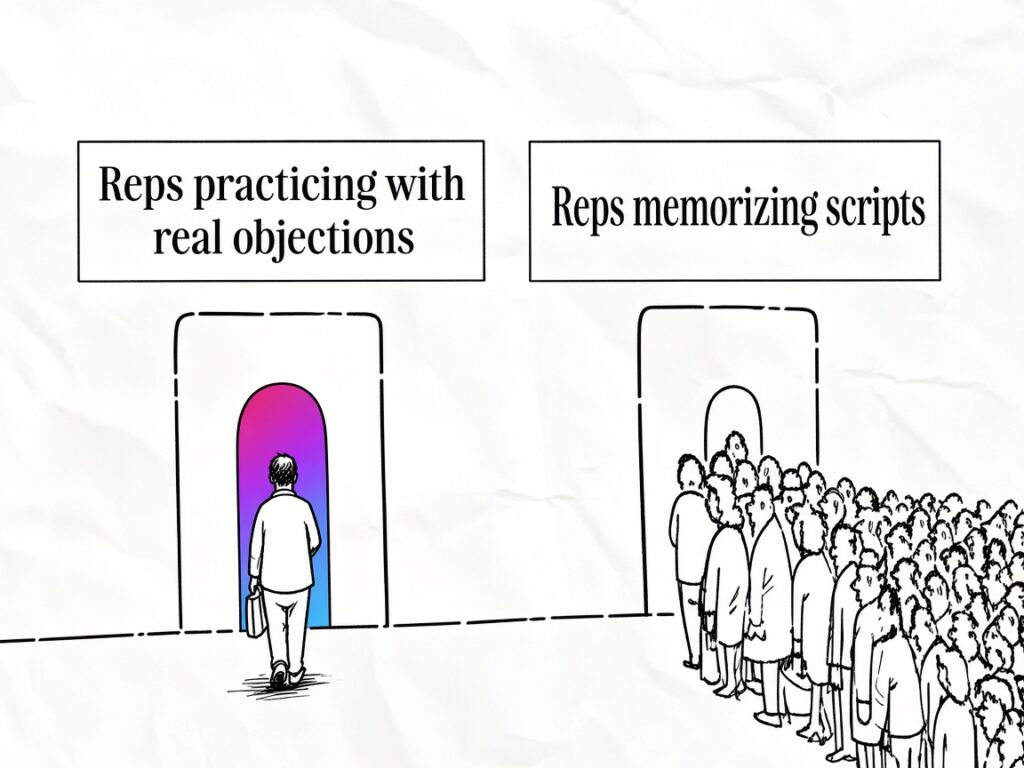
Faster ramp doesn’t mean rushing reps onto live calls before they’re ready. It means giving them the practice and feedback they’d otherwise only get by losing real deals.
Hire reps who’ve sold to a similar buyer
The fastest ramps start before day one. Reps who’ve already sold at a similar deal size, sales cycle and buyer level have less to learn, so they get to full productivity sooner. TRG and Sales Focus both rank this as the first lever for cutting ramp time.
Start practice in week one, not after training
Most programs save practice for the end, after weeks of product sessions. Flip that. Let reps go through the content on their own and use live sessions for practice instead of presentations. Build practice around the conversations they’ll actually have: the cold opener, discovery, pricing pushback and “just send me an email.”
Certify readiness with a scored practice call
Instead of guessing when a rep is ready, test it. Gartner recommends a fail-fast onboarding model where reps complete a simulated sales call scored by a panel before they take on real deals. Use the same rubric for everyone so the bar stays the same. Reps who pass move on faster, and reps who don’t know exactly what to work on.
Keep structured practice going after onboarding ends
This is where most ramp time gets lost, in the months between the end of training and full productivity. Fill that gap with regular practice on the calls reps find hardest, plus feedback from managers on a few recorded calls each week. Reps stay sharp without managers having to sit in on everything.
Fix setup and pipeline delays before they cost you weeks
Some lost time has nothing to do with skill. Reps waiting on tool access, territory decisions or a first list of accounts can burn their first few weeks. Have territory, accounts and logins ready before day one so reps start selling as soon as they’re prepared to.
How does Karzone help new reps ramp faster?
Everything above points to the same problem. New reps need a lot of practice on the right things, and managers don’t have time to give it to them. Karzone is built to close that gap.
It starts with your own won and lost deals. Karzone reads them, along with your call transcripts, to find what your best reps do differently, such as finding the real problem first or ending every call with a clear next step. That becomes the standard every new hire learns, instead of a generic course.
New reps then practise on calls with AI buyers built from your own deals, as often as they need, without taking up a manager’s time. Every practice call is scored against your standard as Not yet, Good or Great, so you can sign someone off with evidence rather than a gut feeling.
You can also see who’s falling behind and on which skill, while there’s still time to help, and show the business how long each new hire takes to get ready and reach their first closed deal.
Want to see what this looks like for your team? Book a call and see Karzone built around your own sale.
Frequently Asked Questions
How do you set a ramped quota for new AEs?
Most teams increase quota step by step over the ramp period instead of giving full quota from day one. Base the steps on your own median ramp time, not industry averages, so targets match how long your deals actually take.
Should new reps get inherited pipeline?
It can help them get early wins and confidence, but track it separately from pipeline they build themselves. Otherwise you can’t tell whether a rep has really ramped.
What’s a realistic ramp target if your sales cycle is long?
Your ramp will rarely be shorter than one full sales cycle plus the time it takes to build pipeline. If your deals take six months, plan for a longer ramp than the 6.2-month average and track early milestones so you aren’t waiting a year to see results.
Does a faster ramp hurt rep quality?
Not if you shorten it with more practice and a clear readiness bar, rather than by lowering standards. Reps who practise more before going live usually handle real buyers better, not worse.